






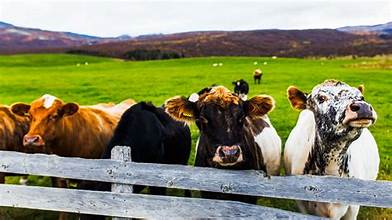
Farmland
In Argentina, people often say “campo” for any rural property, but legally and economically there’s a big difference between an agricultural farm (agro agrícola) and a cattle farm (campo ganadero). The distinction affects land value, taxes, risk, management, and even foreign investment decisions.
Below is a clear, practical comparison from a legal-economic perspective.
1️⃣ Core Purpose
🌾 Agricultural Farm (Campo Agrícola)
Its main purpose is crop production, such as:
- Soybeans
- Corn
- Wheat
- Sunflower
- Barley
- Sorghum
Income depends on harvest yields and commodity prices.
🐄 Cattle Farm (Campo Ganadero)
Its main purpose is livestock breeding and fattening, mainly:
- Cow–calf operations
- Backgrounding
- Feedlot finishing
- Dairy in some cases
Income depends on animal weight gain, reproduction, and beef prices.
2️⃣ Land Characteristics
| Aspect | Agricultural Farm | Cattle Farm |
|---|---|---|
| Soil quality | High fertility | Medium to low fertility |
| Drainage | Excellent | Moderate / natural grasslands |
| Topography | Flat, mechanizable | Rolling, flood-prone or natural pastures |
| Infrastructure | Silos, machinery, roads | Fences, corrals, water systems |
| Productivity | Measured in tons/hectare | Measured in kg beef/hectare |
👉 In Argentina, the best agricultural land is in the Pampa Húmeda (Buenos Aires, Santa Fe, Córdoba), while cattle farms are common in La Pampa, Corrientes, Entre Ríos, Chaco, Patagonia.
3️⃣ Investment Profile
🌾 Agricultural
- High capital intensity
- Requires machinery and inputs
- Sensitive to climate and international prices
- Higher short-term volatility
- Faster cash cycles (each season)
🐄 Cattle
- More stable long-term returns
- Lower operating costs
- Slower capital rotation
- Less exposure to climate shocks
- Animals act as “walking inventory”
👉 Investors usually see agriculture as higher risk / higher reward, and cattle as lower risk / capital preservation.
4️⃣ Legal and Zoning Differences
In Argentina, land use is regulated provincially and municipally.
Agricultural farms:
- Often zoned strictly for crop exploitation
- Must comply with soil conservation laws
- Subject to crop-rotation and erosion regulations
Cattle farms:
- Regulated for animal welfare and environmental impact
- Must follow SENASA animal health rules
- Require water access rights and pasture management plans
👉 Some lands cannot legally be converted from cattle to crops without permits due to erosion, flooding, or conservation rules.
5️⃣ Tax Treatment
Both are rural activities, but taxation behaves differently.
Shared taxes:
- Property tax (Impuesto Inmobiliario Rural)
- Income tax (Ganancias)
- VAT (IVA)
- Export duties (retenciones) in some cases
Differences:
| Factor | Agricultural | Cattle |
|---|---|---|
| VAT cycle | Faster recovery | Slower credits |
| Inventory | Crops per season | Livestock capitalized |
| Depreciation | Machinery heavy | Biological assets |
| Cash flow | Seasonal | Continuous |
👉 Cattle farms often benefit from biological asset accounting, while agriculture relies more on input-output tax planning.
6️⃣ Operational Management
🌾 Agriculture:
- Heavy machinery use
- Crop rotation planning
- Fertilization and pesticides
- Harvest logistics
- Export market dependency
🐄 Cattle:
- Breeding management
- Veterinary control
- Grazing rotation
- Weight monitoring
- Transport to slaughterhouses
👉 Agriculture is logistics-intensive, cattle is biology-intensive.
7️⃣ Risk Structure
| Risk | Agricultural | Cattle |
|---|---|---|
| Climate | Very high | Medium |
| Market price | High volatility | More stable |
| Disease | Low | High importance |
| Input costs | Very sensitive | Moderate |
| Theft | Low | Higher |
👉 One bad drought can destroy an agricultural season, while cattle production absorbs shocks over time.
8️⃣ Profitability per Hectare
Generally:
- Agriculture = higher gross margin per hectare
- Cattle = lower margin but higher land resilience
Example (approximate logic, varies by region):
- Agriculture: strong land → high income / ha
- Cattle: marginal land → steady income / ha
👉 That’s why prime agricultural land in Buenos Aires province is far more expensive per hectare than cattle land in Patagonia or the north.
9️⃣ Conversion Possibilities
Some cattle farms can be converted into agricultural land, but:
- Requires soil studies
- Drainage works
- Legal permits
- Large capital investment
Many cattle lands are not suitable for crops, but almost any agricultural land can host cattle.
🔟 Strategic Use in Argentina
- Agricultural farms drive exports and foreign currency.
- Cattle farms preserve capital and food security.
- Many owners combine both in mixed farms (campo mixto).
Schedule your legal consultation with Sebastian Limeres, Argentina Attorney Lawyer, by visiting https://www.limeres.com or messaging us on WhatsApp:
📞 USA: https://wa.me/+19257918555
📞 Argentina: https://wa.me/+5491141620021
✅ In Simple Terms
🌾 Agriculture is about speed, yield, and price risk.
🐄 Cattle is about time, biology, and capital preservation.
In Argentina, choosing between them is not just a farming decision — it’s a legal, financial, environmental, and investment strategy.